
Sensory hangovers. It's a thing.

Updated: Feb 25
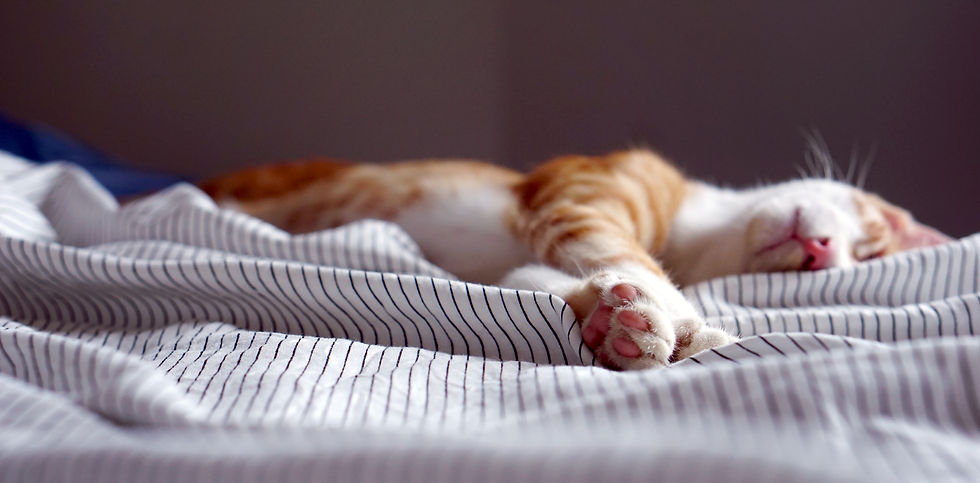
After a seemingly simple lunch date, the exhaustion that followed wasn’t ordinary tiredness — it was a sensory hangover, the crash that comes when your nervous system has been pushed way past its limits.
You know the feeling. You wake with a headache and there are wet sand bags sitting on your eyes, your limbs feel like lead, and you want nothing more than to stay curled up in bed all day.
I'm hungover. But not the way you might think.
So what happened yesterday? Did I drink too much? Answer: No. Did I sleep horrendously? Have a stressful work meeting? Take recreational drugs or forget to take my anti-anxiety meds?
Nope, nope, nope, and nope.
I went out to a nice restaurant for lunch.
That’s it. That’s all it took.
I felt it immediately. The moment we stepped inside, the noise hit me like a freight train.
Once we were seated and alone, my darling, neuro-affirming, love-of-my-life husband leaned over and asked, "Are you okay?", with deep concern written all over his face.
I didn't want to spoil our date. After all, it was our fifth wedding anniversary, he'd taken the day off work, and we'd both been looking forward to dining at this beautiful winery restaurant in the Swan Valley region. We'd previously visited for a Valentine's Day lunch, and the food had been divine.

So I smiled — possibly more of an awkward grimace — and said I would be fine, but perhaps we don't stay for too long? He was happy to oblige. This wasn't our first rodeo.
I had not taken my ADHD medication that day, which was intentional as it decreases appetite. The consequence, however, was struggling to focus on my husband and the task at hand — ordering food and drinks — as I was so distracted and unsettled by the cacophony swirling around us.
The clinking of cutlery — the slamming of cutlery drawers at the many, many service stations scattered around the perimeter — the hum of conversation layered on conversation — the occasional toddler screech — the painful incessant scraping of heavy chairs — the constant movement of waitstaff and customers — the shaking of icy cocktail mixtures — relentless music piping through the ceiling speakers — and the ad hoc disruptions from visiting staff who need to top up your water/wine, and check that you're enjoying every single course — all of it added up, drip by drip, until my nervous system was full to overflowing.

I fought the urge to scream and run into the carpark, covering my ears with my hands.
My husband brought up the idea of bringing my headphones next time. We had discussed this before. I said maybe, but then I say, this would make me stand out and look 'weird'. His response: "Who cares?"
Honestly, what an excellent point. But for all the pride I had in my newly discovered neurodivergence, wearing headphones in a restaurant just felt like something I couldn't bring myself to do yet.
Because, in addition to making me stand out in a headphone-less venue, I also know they won't completely tune out the noise. And, how would I converse with my dining partner?
To top it off, they make my ears sweaty and, finally, just before you recommend Loops to me (which I understand offer a great discreet alternative to giant noise-cancelling headphones), this is not a comfortable option for me, as I detest having tiny things sitting inside my ears.
Instead, I tried to stay calm. Took deep breaths. Tried to focus on the person in front of me rather than the sounds around us.
I had checked the menu in advance so my preferred meals were already selected. This is a common ND practice, ensuring some certainty in advance, and reducing the cognitive demand of having to read and select meals while your nervous system is struggling in a noisy space.
I took a sip of my sparkling pinot, placed my husband's hand in mine, and leaned across the table for a quick kiss.
I recalled the 5-4-3-2-1 grounding method that my wonderful Occupational Therapist taught me, which involves using your five senses to connect with the present moment. I looked around the restaurant, and decided to give it a go:
5 things you can see (handsome husband, water jug, menu, napkin, cool gnarly roots on a tree in the outside courtyard)
4 things you can touch (cool wine glass, husband's warm hand, my fingernails, the polished wooden floor)
3 things you can hear (chair scraping, laugher, slamming door)
2 things you can smell (wood-fired bread, my perfume - Flora by Gucci), and
1 thing you can taste (wine).
This was helpful as a distraction for a few minutes. But it didn't really reduce the anxiety.
I excused myself to visit the bathroom. Sadly, it was not the respite I needed, due to the loud music echoing menacingly throughout the tiled room.
New plan: I went outside to the beautifully manicured lawned area. Again, no peace was to be had. These days, it seems like all nice restaurants and funky cafes have made it their mission to install speakers in every orifice of every room and every area they own, so there is no possible section where it is quiet until you're in the car driving home.
I presume the owners/managers think they are providing ambience. Which I'm sure they are, with most people enjoying the soft waves of instrumental music.
But for me, and others like me, it feels like my needs are invisible, and public places are not safe.
By the time we got home, I felt wrung out.
Every muscle ached, my skin was buzzing, and my brain just… stopped cooperating.
Words didn’t come easily. Decisions were impossible. All I could do was put on my favourite comfy pants and fluffy socks, pull down all the blinds, curl up on the couch with a blanket over my body, and wait for it to pass.

That’s what a sensory hangover is — the crash that follows sensory overload. It’s your body demanding rest after hours of forced endurance.
For neurodivergent people, especially those who are autistic or ADHD, this isn’t rare or dramatic, it’s just reality. Our brains don’t filter sensory input the same way. What others can tune out — lights, noise, textures, smells — we feel all at once, all the time.
So while a lunch out might look simple, it’s actually an extreme sport for the nervous system. And the aftermath can feel like the worst hangover imaginable.
Recovery looks like darkness, stillness, soft fabrics, quiet voices, comfort shows, stimming, having at least a day or more with no plans. It looks like learning to listen when my body whispers, "That’s enough."
Because I did nothing wrong. I just reached my limit.
The solution here is not to completely pull away and avoid the world. Because that would be an unfair tax on ND folk just for having a different kind of brain.
I freaking love restaurant food. It's a sensory treat that I never want to lose from my life. So I'll just do it occasionally. I'll factor in adequate recovery time and maybe — maybe — I'll wear headphones one day.

Comments